

Written by Michael Walsh | Associate Director
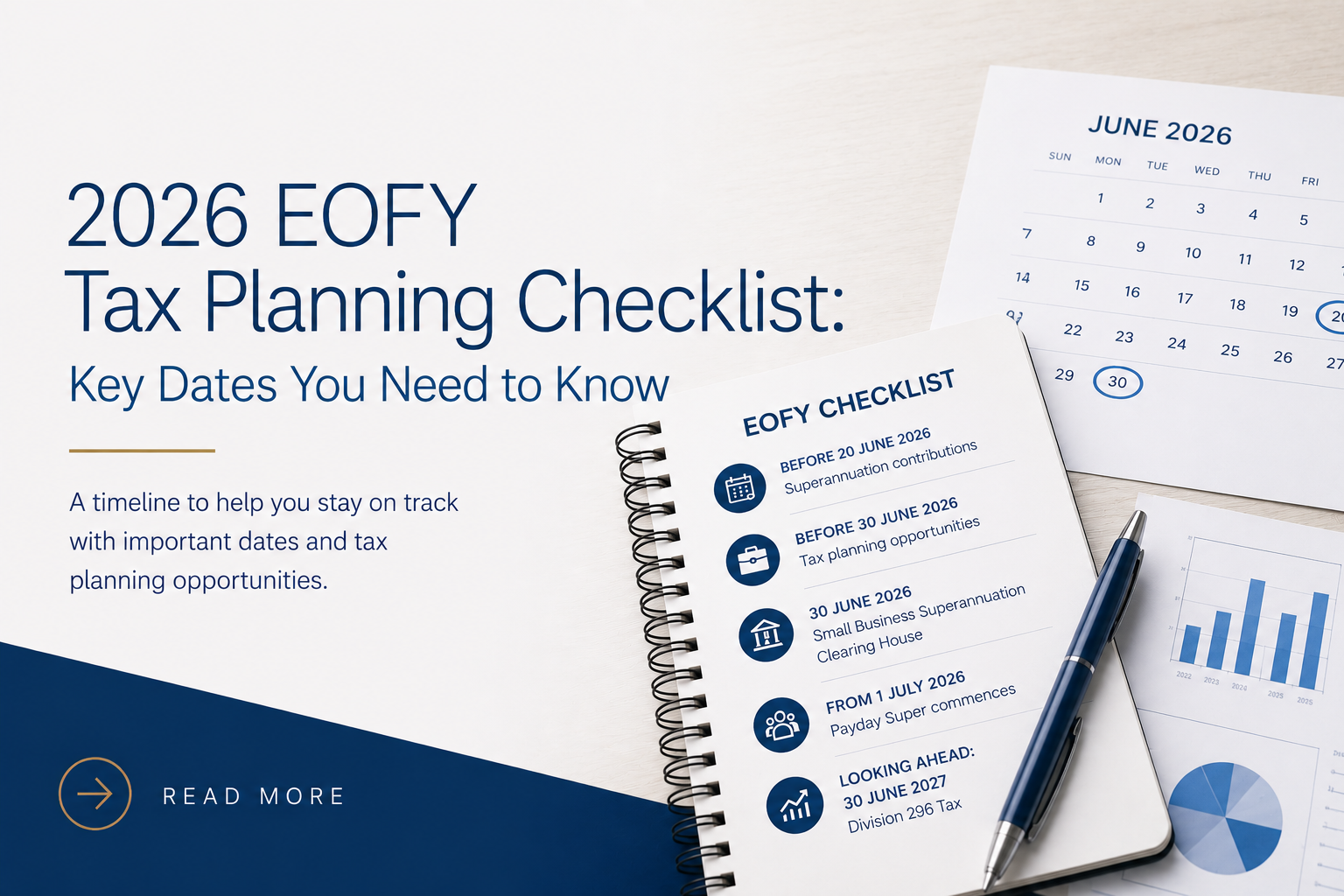
With 30 June fast approaching, now is the time to review your tax position and ensure you’re taking advantage of available opportunities before the end of the financial year. Use this checklist to stay on track and prepare for upcoming superannuation changes.
✅ Before 20 June 2026
Superannuation Contributions
- Make any personal deductible or salary sacrifice super contributions to allow sufficient processing time before 30 June.
- If claiming a tax deduction for personal concessional contributions, ensure you lodge a Notice of Intent to Claim a Deduction with your super fund before lodging your tax return.
Small Business Owners
- Review planned business asset purchases before 30 June. Eligible small businesses with turnover up to $10 million may be able to claim an immediate tax deduction for assets costing less than $20,000 per item.
- You should also consider bringing forward deductible expenses or deferring income where appropriate to help manage your tax position.
Superannuation Planning
- Review your concessional tax-deductible contributions and ensure you have not exceeded the $30,000 cap.
- If you are aged 67 or over, you must satisfy the work test requirements before making concessional contributions.
- Consider using unused concessional contribution caps from previous years if eligible to obtain an additional tax deduction. Remember that 2025-26 is the final year to utilise any unused concessional contribution amounts from the 2020-21 financial year.
- Review whether Division 293 tax may apply if your income and concessional contributions exceed $250,000.
Property Investors
- Review your rental property deductions, including depreciation, interest, insurance, repairs and loan-related expenses.
- Ensure you have a current depreciation schedule to maximise available deductions.
📅 30 June 2026
Small Business Superannuation Clearing House
- Businesses currently using the Small Business Superannuation Clearing House should make arrangements to transition to an alternative solution before the service closes.
📅 From 1 July 2026
Payday Super Commences
- Employers will need to pay Superannuation Guarantee contributions at the same time employees are paid, rather than quarterly.
- Review payroll systems and cash flow processes to ensure your business is ready.
- Be aware that super contributions must generally be received by employees’ funds within seven business days of payday.
📅 Looking Ahead: 30 June 2027
Division 296 Tax
- Individuals with superannuation balances approaching or exceeding $3 million should review the potential impact of the proposed Division 296 tax.
- SMSF trustees should consider future asset valuation requirements, as super fund asset values at 30 June 2027 may influence the calculation of any additional tax.
Need EOFY Advice?
The weeks leading up to 30 June often provide the greatest opportunity to implement effective tax planning strategies. If you’d like assistance with superannuation contributions, trust distributions, rental property deductions or EOFY planning, contact the Walshs team on (07) 3221 5677 or enquiries@walshs.com.au.